PRIOR
ADJUVANT TRIALS
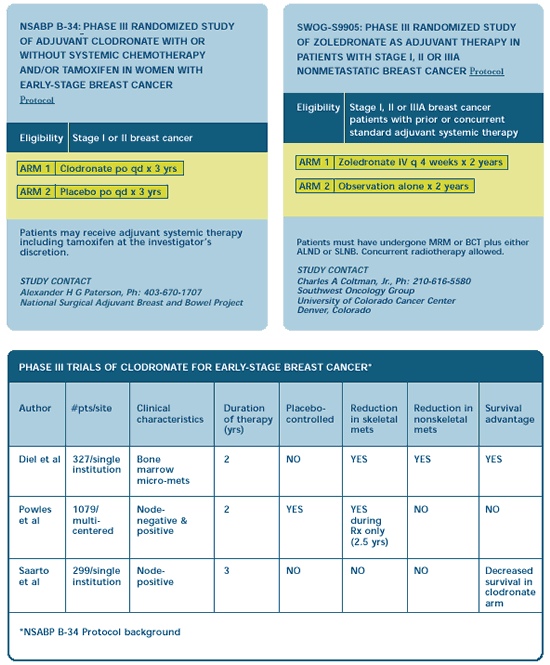
There are results from three randomized trials of adjuvant clodronate.
In our study, patients receiving clodronate had fewer subsequent
bone and nonbone metastases. The largest study was done in Great
Britain, Canada and Scandinavia. In terms of methodology, it’s
the best, because it was placebo-controlled and double-blinded.
They found a reduction in bone metastases but no significant effect
on overall survival. The third study was done in Finland and was
not placebo-controlled. In 300 node-positive patients, they observed
no effect on the rate of bone metastases and a negative effect
on disease-free survival and nonosseous metastases. No other bisphosphonate
study has reported this type of negative effect. In addition to
different methodology, the clear difference in the three studies
is the selection of patients.
When we started our study ten years ago, we selected patients
with tumor cells in the bone marrow, because we were convinced
this was the best prognostic factor for bone metastases. Today
we know it’s also a good prognostic factor for nonbone metastases,
because it reflects the early hematogenous spread of breast cancer
cells from the primary tumor.
Clodronate is not available in the United States, because several
years ago, the initial studies reported a number of leukemias
that were eventually demonstrated to be unrelated to clodronate.
From that time it was not pursued as an antiosteolytic drug in
the United States. The problem with the bisphosphonates is that
the gastrointestinal absorption rate is low, and in order to see
an effect, you need a dose that may cause side effects, particularly
on the gastrointestinal tract. I support the new NSABP clodronate
study, because it’s important to confirm our data, but I
don’t know whether it was a good decision to include all
breast cancer patients as opposed to attempting to select those
most likely to develop bone metastases.
—Ingo
Diel, MD
NSABP
B-34: RATIONALE FOR CHOOSING CLODRONATE
Several oral and parenteral bisphosphonates are available for
clinical testing in the adjuvant therapy of operable breast cancer
in North America: etidronate, clodronate, alendronate, pamidronate,
ibandronate, and zoledronate.
The ideal agent would be one known to be highly efficacious and
conveniently administrable to ensure maximum compliance. Etidronate
has been tested in myeloma and has shown no obvious efficacy in
reducing skeletal complications. ... Alendronate, an oral aminobisphosphonate
widely used in the treatment of osteoporosis, has not been tested
in large clinical trials of patients with malignant disease. ...
Pamidronate, ibandronate, and zoledronate are more potent agents
but have not shown a clearly significant advantage in inhibiting
malignant osteolysis. More importantly, they must be given intravenously
every 3-4 weeks. ... Oral clodronate has been tested in three
adjuvant trials, as well as in many metastatic bone studies, it
is well tolerated; and it shows good evidence of prompt and effective
inhibition of bone resorption.
—
NSABP B-34 Protocol
MECHANISM
OF ACTION
We have a large number of bisphosphonates either in the clinic
or becoming available, and their potency is increasing. Most data
are from clodronate and pamidronate — osteoclast inhibitors.
Recently it was shown that these non-nitrogen-containing bisphosphonates
appear to have a different mechanism of action at the cellular
level than the nitrogen-containing bisphosphonates.
In advanced disease, we mostly use bisphosphonates to reduce complications
in conjunction with other standard treatments. We are looking
to control pain, hypercalcemia and fractures, and to reduce the
requirements for radiotherapy and surgery. In adjuvant studies,
clodronate reduces metastases in bone by a small amount, and in
one study, there was a significant reduction in visceral metastases
and an improvement in survival, but we need to do other studies
to confirm this.
—Professor
Anthony Howell, FRCP